The Tulip: A Symphony of Spring and Silent Elegance
The tulip's journey is one of the most storied in botanical history, tracing its roots from the wild slopes of Central Asia to the opulent courts of the Ottoman Empire. In 16th-century Constantinople, the flower was revered as a symbol of paradise and divine perfection, so much so that its Turkish name, "lale," shares the same letters in Arabic script as "Allah." By the time it reached the Netherlands, it ignited "Tulip Mania," a period where single bulbs were traded for the price of grand estates. Today, this legacy of luxury persists, as the tulip remains a global emblem of refined beauty and the arrival of spring, finding a special place in the bustling flower markets of Hong Kong where it symbolizes prosperity and the promise of new beginnings.
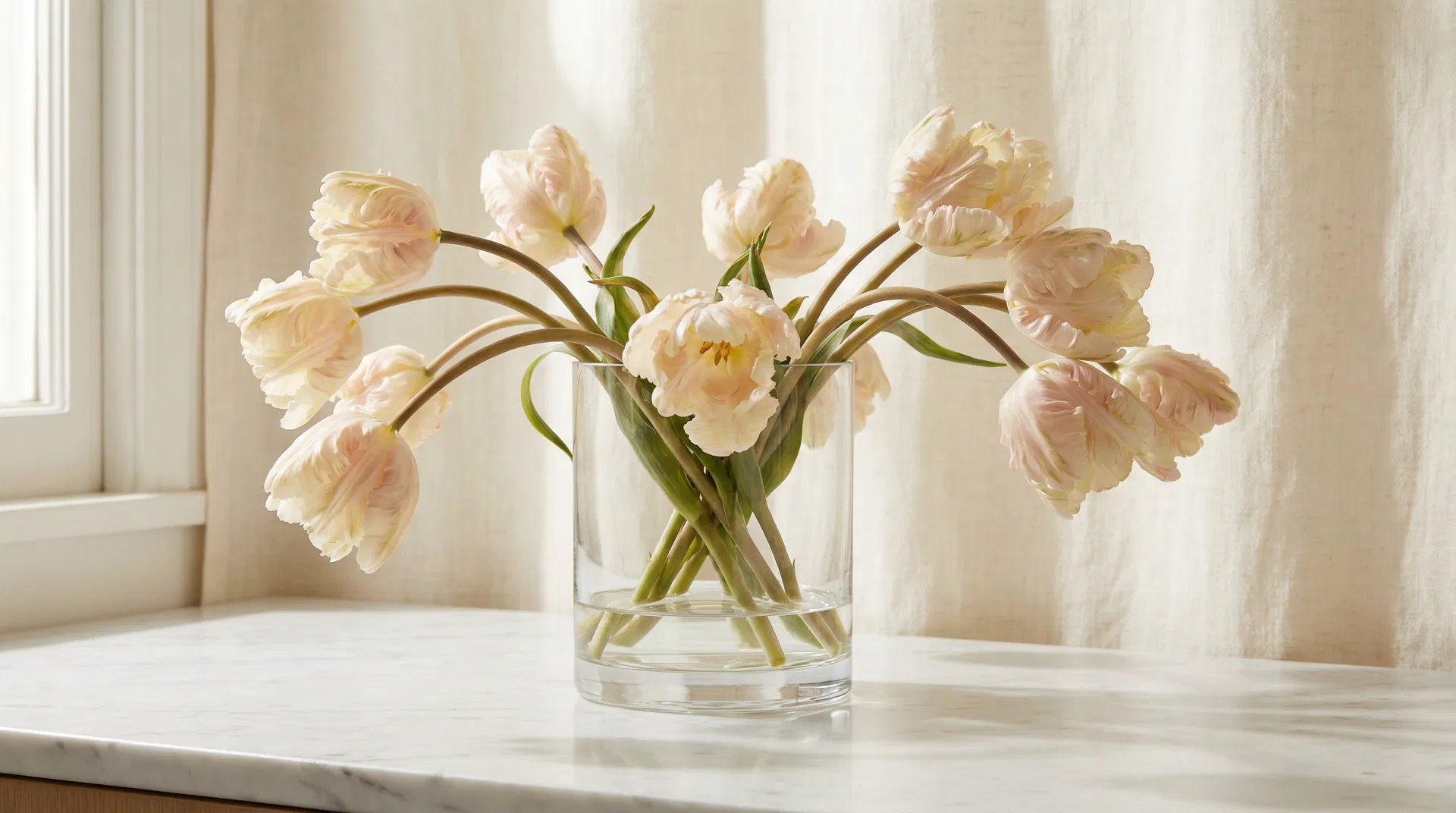
As a cut flower, the tulip possesses a unique, almost sentient quality that sets it apart from more static blooms. Unlike many other flowers, tulips continue to grow in the vase, often gaining an inch or more in height as they stretch toward the light. Their stems are remarkably supple, allowing them to arch and dance in a way that feels both organic and artful. This "movement" makes them a favorite for editorial-style arrangements, where their evolving silhouettes create a living sculpture that changes daily. Whether standing tall in a structured bouquet or cascading over the rim of a crystal vase, they bring a sense of dynamic elegance to any interior.
In the art of floral design, tulips are versatile performers that can shift roles depending on the arrangement's intent. Their bold, cup-shaped blooms and vibrant color palettes make them exceptional focal flowers, commanding attention with their architectural simplicity. However, when used as accents, they provide a soft, fluid counterpoint to more rigid textures like roses or lilies. For a modern, high-end look, we often recommend grouping them in monochromatic clusters to emphasize their form, or pairing them with delicate fillers like waxflowers to highlight their smooth, waxy petals.
To ensure your tulips remain a vibrant centerpiece at home, a simple yet effective care tip is to provide them with very little, but very cold water. Tulips are "thirsty" but prone to over-hydration, which can cause their stems to become soft and droopy. Fill your vase with only two to three inches of cold water and refresh it daily, trimming the stems at a sharp 45-degree angle each time. A well-known florist's secret to keeping them upright is to pierce the stem with a small pin just below the flower head; this releases trapped air and encourages water to reach the bloom more efficiently, preserving that crisp, upright posture for days longer.